'40 Watts from Nowhere' Amplifies Free Radio
40 Watts from Nowhere follows Los Angeles pirate station KBLT 104.7's brief, but impactful time over the airwaves. What began as one woman's quest to provide a "tasty alternative" to mainstream stations became a movement broadcast from a tiny studio.
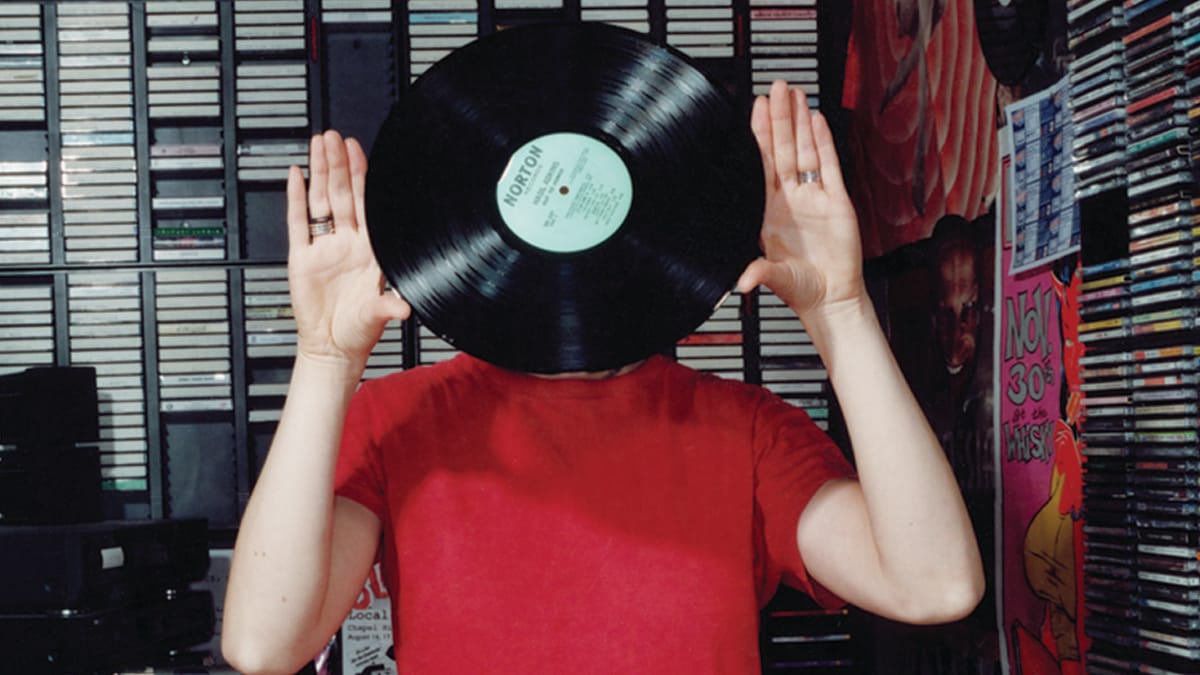
In today's internet-driven society, it really isn't that novel to broadcast a radio show out of your apartment. In fact, I do it from the comfort of my home nearly every week. Easy access to digital tools and recording equipment makes it possible (as well as being connected to a station that allows remote access). Yet, radio was different before the new millennium, especially if you wanted to escape from whatever fads corporate media were pushing at the time. Anyone could broadcast from home back then, too, but the caveat was that it was often illegal.
40 Watts from Nowhere follows Los Angeles pirate station KBLT 104.7's brief but impactful time over the airwaves. KBLT was an innovator at the peak of the free radio and microradio movement, and paved the way for the wave of legal LPFM stations that appeared in the 2000s.
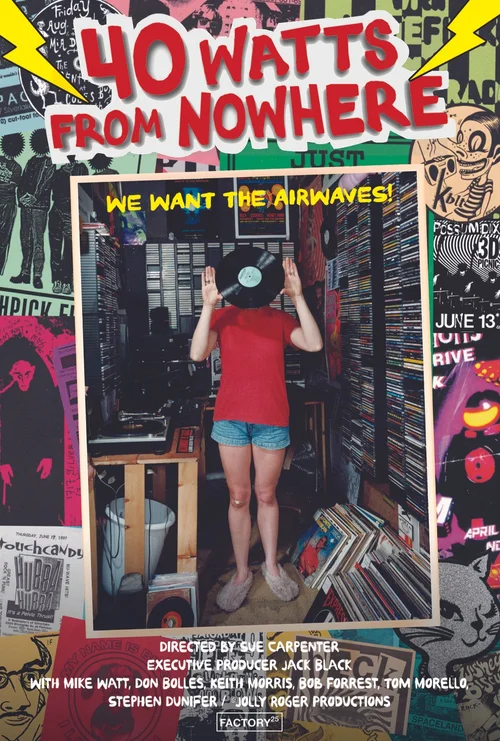
Directed and produced by station founder Sue Carpenter (who operated under the alias Paige Jarrett), the documentary follows KBLT's rapid ascent from a tiny apartment operation to an urban legend of the then-burgeoning Silver Lake music scene. What began as one woman's quest to provide a "tasty alternative" to mainstream stations became a movement across Los Angeles.
The documentary includes interviews and archival footage with Carpenter herself, numerous KBLT DJs, legal experts, musicians, and even commentary from Tom Morello (Rage Against the Machine, Audioslave). A former KBLT DJ shot footage of the station during its heyday up until the dismantling of the studio, intended for a documentary that never materialized. Later, the footage was used to complete 40 Watts from Nowhere. Through the footage, the audience gets to watch KBLT's birth and then its unceremonious removal from the air on camera. And in between, Carpenter narrates what happens as other DJs provide their commentary.
Overall, 40 Watts from Nowhere is a pleasant trip down memory lane with an amazing soundtrack. What's a documentary about a radio station without good music? Featured artists include Bikini Kill, The Breeders, Bratmobile, Black Flag, L7, Mudhoney, Rage Against the Machine, and more.
Los Angeles is known for being a major entertainment hub, but what made KBLT special was its freeform programming and eclectic group of DJs, which included punk legends such as Keith Morris (Black Flag, Circle Jerks), Mike Watt (Minutemen, fIREHOSE), and Don Bolles (Germs). At any given moment, you could hear amazing local bands, international electronic music, a classical mix, and strange tunes that defy categorization. Most of the DJs were neighbors and folks embedded in the community. It was a rejection of the mainstream and glamor of Hollywood, which was geographically close yet culturally distant. It was a space for the weird, the unproven, and the risky. As indicated in the documentary, KBLT eschewed what media conglomerates dubbed as already popular and allowed listeners to actually discover what they liked.
Additionally, the station's allure was that it was illegal, and for a while, it dodged the FCC. KBLT's true location was for those in the know, and its clever advertising piqued interest without giving everything away. If you wanted the details badly enough, you'd just have to find out yourself.
Due to its underground status and connected DJs, KBLT became a word-of-mouth sensation and a popular tour stop for bands, and even attracted major acts such as the Red Hot Chili Peppers for a living room performance, Thurston Moore of Sonic Youth, Jesus and the Mary Chain, and Mazzy Star for a benefit concert. What KBLT lacked in polish, it made up for in great music. Yet at its peak, KBLT became another casualty of FCC enforcement.
40 Watts from Nowhere is a time capsule of nineties cool and a moment that can't be replicated in today's digital-dominant society. Radio still has its value, but streaming and social media have largely displaced more analogue methods of music discovery and distribution. And even more than before, much of the broadcast industry is being consolidated and eliminated altogether. However, many LPFM stations are still fighting the good fight.
Stephen Dunifer, founder of Free Radio Berkeley, is a central figure in the documentary. His lawsuits against the FCC energized the national microradio movement from which KPBJ and KBLT emerged. He believed in "electronic civil disobedience," which spread like wildfire in the mid-nineties.
Sadly, former pirate operators were forbidden from obtaining low-power FM licenses under the Radio Broadcasting Preservation Act of 2000.
As much as the documentary is dedicated to KBLT, it is also a chronicle of the tumultuous battle for free speech and more accessible airwaves so that "all different kinds of people can play all different kinds of music."
KBLT stands as a lasting example of what a radio station can be and helped ignite the legal LPFM movement. Luckily, the LPFM movement is still here with further expansion due to the Local Community Radio Act of 2010. With analogue media appreciation back on the rise, many local stations are keeping the spirit and taste of KBLT alive.
Following its premiere at Slamdance, 40 Watts from Nowhere launched its theatrical run in New York City on July 17th, 2026. It will continue its run today, July 20th, in Los Angeles. For more information about the film and upcoming screenings, visit Factory25.com.